On-Market Deals Aren’t Dead. You Just Have to Be Smarter.

Everyone says the best deals are “off-market.”

Cool story.
But here’s the truth: you can still make serious money buying on-market — if you know how to add value.

The cheat code?
👉 Improve the planning.

And paradoxically, that’s often easier once planning already exists.

Case in point 👇


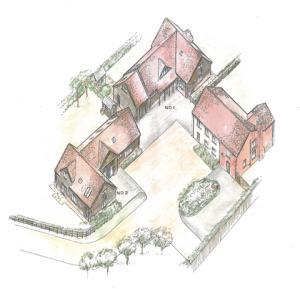
🏡 On-Market Deal: Bedfordshire

What was for sale:
Farmhouse with planning permission for:

  • 2 new-build homes in the garden (95m² + 135m²)

  • Existing barns to be replaced

  • A 150m² greenhouse approved for commercial conversion

Asking price: £1m
Bought for: £940k (all in, including stamp + fees)

So far… pretty vanilla.


🔧 Where the Value Was Added

Instead of accepting the planning as-is, the scheme was resubmitted.

Key upgrades:

  • Repositioned the new homes so they didn’t sit directly in front of the farmhouse

  • Removed the greenhouse entirely

  • Traded that space to increase the size of both new homes

Result:
Two brand-new units at 200m² each instead of 95m² + 135m².

Same site.

Same deal.

Much better outcome

.


💸 The Numbers (Because Numbers Matter)

Build costs:

  • New builds: £200 / sq ft × 4,500 sq ft = £900k

  • Refurb existing farmhouse: £100 / sq ft × 2,300 sq ft = £230k

Total development cost:
👉 £2.07m

GDV:
👉 £3.1m

Profit:
👉 ~£1m


🧠 The Takeaway

The deal didn’t come from a secret WhatsApp group.
It wasn’t off-market.
No magic tricks.

The profit came from planning intelligence.

If you can:

  • Buy something with permission already in place

  • Improve that permission

  • And unlock more space or better layouts

You don’t need a “perfect” market.

You just need a better plan.

The Big Money Hiding Behind a Normal House

Imagine this: someone picks up a site for £1.1m. Nothing dramatic. Just a regular house with a ridiculously big back garden. Instead of knocking everything down, they keep the original home, create a simple access route down the side, and build five new houses in the back.

Now check out the numbers:

  • GDV: £3.75m + Existing House £650k = £4.4m

  • Build cost: £2.1m

  • Land: £1.175m with fees

  • Profit: £1.125m (a 35% return on cost)

All from spotting a piece of land most people probably walked past.

This isn’t a mega-development. It’s just seeing potential, getting planning approved, and making it happen. Yet the profit? That’s “most people work their entire lives for this” money. One smart deal vs. 40 years on the grind… I know which option I’m picking.

Planning on this one was secured in 2021, and here’s the thing: deals like this didn’t disappear. They’re still everywhere. In every town, every city, every neighbourhood. Great opportunities are sitting in plain sight—you just need to train your eyes to notice them.

In this case, the magic was simple: one house in a built-up area with an oversized garden. Smart design turned that wasted space into five brand-new homes.

Once you find chances like this, the next step is straightforward: reach out to the owner. Build a relationship. Become someone they trust and want to work with.

Negotiation is the superpower here. And it’s a skill anyone can learn—by actually getting out there and talking to people. Learn to think on your feet, build rapport, understand what someone cares about, and guide the conversation in a direction that works for both sides.

What works best? Slow, natural relationship-building. No pressure. No racing. Just a genuine connection that makes the owner feel comfortable and confident doing a deal with you.

So get out there. Practice your negotiation muscles. Start conversations. Look for the plots everyone else shrugs off.

Great deals are all around—you just have to spot them and make the first move.

How a Boring Old Pub Turned Into a Sweet £600k Upside

Every so often, a property deal pops up that reminds you real estate isn’t just about bricks and rent checks—it’s about spotting hidden upside before anyone else sees it.

Case in point: a tired old pub that hit the market for £1.1M. Vacant possession, decent location, big plot. Nothing crazy on the surface… unless you know what you’re looking at.

🧠 Step 1: See the potential no one else squints hard enough to notice

The building itself wasn’t the star.
The land was.

The new owners clocked the opportunity to turn this chunky site into something way more valuable than a lonely pub with sticky carpets and a fruit machine.

🏗️ Step 2: Work the planning magic

This is where the value gets manufactured.

They secured planning permission to:

  • Convert the ground floor into a retail unit

  • Lock in the Co-Op as a tenant on a 15-year lease (hello, dependable income 👋)

  • Extend the rear of the building

  • Add 9 new flats on the upper floors (3 one-beds, 6 two-beds)

  • AND squeeze in one 3-bed house at the back, which opened onto a separate road

In property terms, this is like turning a £10 note into a £20 note just by folding it differently

.

💰 Step 3: Sell with the new upside baked in

Planning permission = value rocket fuel.

Once all permissions were secured, the site was resold for £1.7M.

Do the maths: that’s a £600k uplift, created without building a single brick.
Just vision + paperwork + a Co-Op lease that makes buyers nod approvingly.

🧩 The Takeaway

This is the quiet superpower of property:
You don’t always need to develop. Sometimes you just need to unlock potential others haven’t tapped yet.

Find the overlooked asset.
Add the value on paper.
Exit with a smile.

That’s the whole game.

Time to Take Action: No More Excuses

Time to Take Action: No More Excuses

You’ve got the blueprint. You know the steps—from identifying your site to sealing the deal. You’ve studied, absorbed, and maybe even highlighted your way through all the information. But here’s the kicker: knowing what to do is one thing, actually doing it is a whole different story.

For many, the next step doesn’t happen. They freeze. They procrastinate. And they stay stuck. We get it—it’s easy to dive deep into theory, but harder to take that first leap into the unknown. But if you have the information, and you’re still not taking action, you’re only doing one thing: holding yourself back.

This is the part where most people check out. They feel scared, they worry it’s too tough, or they think they need to wait for the “perfect moment” (spoiler: it never comes). But here’s the cold truth: the position you’re in today? It’s a reflection of the choices you’ve made. You are the architect of your own life—whether you realise it or not.

The Comfort Zone Trap

Here’s the thing: growth doesn’t happen in your comfort zone. In fact, it’s the opposite. It’s the unsexy truth that doing the hard stuff—the things you avoid—ultimately leads to the life you want. Want to lose weight? You gotta drag yourself out for that morning run, even when you don’t feel like it. Want to build a business? You have to make those calls, send those emails, and follow through.

It’s not the easiest path, but it’s the most rewarding. As much as we crave the shortcuts, the “easy way,” that’s the road that leads to burnout and regret. If you’re avoiding the uncomfortable stuff today, you’ll be looking back in a year thinking, “What could I have done if I’d just gone for it?”

What Are You Waiting For?

So, what are you really waiting for? The time will never be perfect. There will always be a reason to wait—whether it’s too much work, family commitments, or even a global crisis. But here’s the deal: if you don’t make the leap now, you’ll be in the exact same spot this time next year.

Let’s be real. You’ve got to make a definitive decision. Stop accepting what life throws at you and start creating the life you want. Health, wealth, love, happiness—yes, all of it is within your reach, but only if you commit to it. So, let’s get real: how do you start?

Build Your Plan (And Stick to It)

Step one: Get clear on what you want. What’s your vision for the next 1, 5, or 10 years? No one looks back at 90 and thinks, “I wish I had watched more Netflix.” You’ll regret not taking those chances, not pushing yourself, not starting that business, or taking that challenge.

Once you’ve got a vision, break it down into manageable goals. Want to start a business? What are the 3 steps you need to take this week? Get specific. Build a plan. And then make it happen—every single day.

Time Management: The Ultimate Hack

We all have 24 hours a day. The difference between you and the ultra-successful? Time management. Those high-performers? They don’t waste time scrolling through social media or watching random YouTube videos. They build their day around what matters.

Ask yourself: What are you doing right now that doesn’t align with your goals? What could you eliminate or cut back to make more time for the things that will move the needle in your life? The key to getting ahead is prioritising the things that matter most.

Look, you’ve got a job, a family, and a busy life—so does everyone else. But it’s how you manage your time that determines your success. You could be spending 4 hours a day on your personal business—if you make the time. Think about it: if you dedicate just 1 hour a day to your goals, that’s 365 hours over a year. That’s nearly 9 full workweeks—imagine how much you could achieve!

No More Excuses

But here’s the truth: most of you will still procrastinate. You’ll tell yourself that now is just “not the right time.” You’ll convince yourself that you need more money, more time, or just a better situation before you can take the plunge. But that’s all nonsense. The best time to start is right now.

If you keep waiting for the “perfect moment,” you’ll be stuck exactly where you are right now, one year from today. Trust us, there will never be a perfect moment. There will only be this moment, and it’s up to you what you do with it.

Build Momentum, One Day at a Time

Success doesn’t happen overnight. It’s all about momentum. At first, it feels hard to move the rock. But once you start, it gets easier. Every small action you take builds up to something big. Every day you work toward your goals adds up. The key is not stopping.

So, what’s the one thing you can do today to start moving forward? Is it signing up for that course? Making that cold call? Writing that first page of your business plan? Whatever it is, make it happen.

Confidence Through Action

Feeling unsure? You don’t need to have everything figured out. Confidence comes from action. Every time you keep a promise to yourself—whether it’s getting up early, hitting the gym, or working on your business—you build self-confidence.

Start small. Stick to your commitments. Get those small wins. And before you know it, you’ll be moving forward with unstoppable momentum.

The Bottom Line

This is it. You’ve got all the information. Now it’s time to take action. The longer you wait, the more you risk settling for an average life, a life of “what-ifs.” So, stop making excuses. Don’t wait for the right time. The right time is right now.

The journey won’t always be easy. But remember, the hardest part is taking the first step. The rest? Well, that’s just momentum—and you’re about to build a lot of it.

Let’s go.

Step 6: Cashing In on the Planning Gain

You’ve made it this far — found a juicy site, tracked down the owner, locked in an option agreement, and survived the emotional rollercoaster known as the planning process. Congrats. You’re now standing at the final boss level: trading the deal.

Unless you’re planning to become a full-blown developer (think: construction headaches, financing stress, and 18 months of your life disappearing into a hole in the ground), this is where you take the quick win.

Sell Early, Sell Smart

Once your option agreement is signed, don’t wait for planning to be rubber-stamped before you start talking to buyers. Get the sale process rolling early. And whatever you do, don’t pin all your hopes on one developer.

Developers drop out all the time — funding falls through, they get stuck exiting their last project, or they suddenly land a bigger, shinier deal. The point is: they’re flaky. So speak to multiple potential buyers and keep your options open.

Where to Find Buyers

  • Your own network (gold mine).

  • Developers you’ve stalked—sorry—researched on the online planning portal.

  • Local land agents who can shop your deal around to their contacts.

But here’s the trick: you need to work the sale like you have the rest of the process, look at multiple options.

Also, once your planning application goes in, expect some inbound action. Local developers love sliding into inboxes early to try to grab a site before it hits the open market.

Where the Profit Kicks In

Because you secured the site at a discount (in exchange for your time, risk, and planning hustle), you now get to enjoy that sweet planning uplift — the price boost that comes once permission is in place.

Example:
You secure an option at £300k.
A developer now sees it as shovel-ready and offers £400k.
Congratulations, you just made £100k without laying a single brick.

And the best part? You don’t even need to fund the purchase. It’s either:

  • A back-to-back transaction (you buy and sell simultaneously, pocketing the difference), or

  • You simply sell the option agreement for the £100k uplift.

Why Trade Instead of Build?

Trading deals is faster, cleaner, and way less stressful.

Building a project yourself? That’s 12+ months of contractors, bank loans, cost overruns, and praying the market doesn’t tank right before you list the completed units. Developers have gone broke waiting for the last few houses to sell.

Trading land deals avoids all that. You get a bigger slice of the pie, in a fraction of the time, with a fraction of the risk.

The Bottom Line

When you weigh the headaches of development against the speed and profitability of sourcing + trading sites, the smarter play for most people is obvious:

Become a land-deal trader, not a developer.

Step 5: Nail That Planning Permission

So you’ve locked down your site with an option agreement — nice work. Now it’s time to roll up your sleeves and get into the planning game. This is where dreams meet red tape… and where value gets made (or destroyed).

👷‍♂️ Assemble Your Avengers (aka Your Professional Team)

Don’t go hiring architects and having plans drawn up before the ink’s dry on your option agreement. That’s just burning money.
But — do grab a quick chat with one early on, ideally one you have a relationship with already. A good architect will sniff out red flags (and hidden potential) faster than you can say “planning committee.”

Once your deal’s secured, line up your team so you can hit the ground running. The clock starts ticking as soon as the option’s signed — and those 12–24 months go faster than you think.

Pro tip: push for a 24-month option with the right to extend. Vendors will want shorter; you’ll want longer. Compromise smart.

Your dream team usually looks like this:

  • 🧱 Architect

  • 🗺️ Planning consultant

  • 👩‍🔬 Various specialists (depending on how spicy your project is)

For simple sites, a solid local architect might be all you need. Bigger, messier projects? Bring in the cavalry.

🤫 Keep It Quiet

While you’re still negotiating, mum’s the word. The more people who catch wind of your site, the more likely some rival developer swoops in to steal your deal.
Only bring your inner circle in on it — and make sure they know it’s strictly need-to-know.

💡 Design Smart = Add Value

Here’s the secret sauce: your profit lives in the design. The better you use that land, the more value you create.

But don’t just pack it full of units and call it a day — planners hate that. Match the local vibe. If the street’s full of detached homes, don’t show up with a 5-story block of flats and expect applause.

Do some recon. What’s already been approved nearby? What’s the average density? Follow the breadcrumbs — planners love precedent.

⚖️ The Risk Game: Planning Permission

This is where things can get dicey. There’s never a 100% guarantee you’ll get approval.
To lower your risk:

  • Pick sites with good odds (aka “common sense winners”).

  • Know your local planning policy + NPPF.

  • Hire a pro team that’s been around the block.

And remember — even the best team needs a push. Don’t just sit back and let them handle it. Challenge layouts, question assumptions, and squeeze every drop of potential out of that plot. It’s your job to direct your team!

If you get rejected? Don’t panic. Review, regroup, maybe appeal. (Bonus: this is why partnering with deep-pocketed JV partners early on is smart — appeals aren’t cheap.)

🧠 Pro Tip: Get Inside the Planning Machine

If you’re serious about this game, grab a coffee and start studying the National Planning Policy Framework (NPPF) and your local planning guidelines. Even better — go sit in on a few local planning meetings. You’ll learn how the real decisions get made (and what politics really looks like). As a minimum, you’ll want to review all the planning applications being made in your area to better understand the planning game.

🏢 Pre-App Meetings: Friend or Foe?

“Pre-app” meetings are like a soft launch for your planning application. You show planners your early concept; they give feedback before it’s official.

Pros:

  • Builds a relationship with the planning team.

  • Keeps things off the public record.

  • Great if you’re testing the waters before fully committing to a site.

  • You get an intial review of your site from the planners.

Cons:

  • Takes time.

  • Planners often stay vague (“we can’t say for sure…”).

  • Adds another layer to an already slow process.

Our take? Sometimes it’s faster to just go all in and submit. Once the clock starts ticking, planners have to make decisions. Be guided by your planning consultant in the best course of action.

🔁 The “Sneaky Upgrade” Strategy

Once you snag planning permission, you can sometimes go back and upgrade the design — more units, better layout, higher value. The oldest planning trick in the book.
It’s like getting your foot in the door with a smaller ask, then coming back with the big one once the council’s comfortable with you. Works like a charm.

🧾 Planning Obligations: The Hidden Costs

Congrats — you’ve got planning! But before you pop the champagne, check for:

  • Section 106 (S106) agreements — legal obligations or financial contributions you owe.

  • Affordable housing requirements — usually triggered at 10+ units.

  • Community Infrastructure Levy (CIL) — a tax on new development, charged per m².

All of these hit your bottom line, so know them upfront.

🔍 Site Reality Check: Things That Can Bite You Later

Even with pros on your side, you need to train your eye for deal-breakers. Some quick examples:

  • 🏞️ Conservation areas or listed buildings = headaches.

  • 🌳 Protected trees (TPO’s) = no-go zones.

  • 🧱 Old covenants, easements, or public footpaths.

  • 💧 Flood risk or drainage issues.

  • 🦇 Wildlife, contamination, archaeology (yes, bats and Roman ruins can ruin your day).

  • 🏗️ Sloping or uneven land (aka “money pit foundations”).

  • ⚡ Utility access, visibility splays, and parking standards.

The House Builder’s Bible by Mark Brinkley is a must-read here — it’ll turn you from novice to ninja fast.

💰 Market Check Before You Build

Before hitting “submit” on that application, sanity-check your end product. Are you planning flats in an area already flooded with flats?
Developers love density because it looks great on paper. But if the market’s oversaturated, you’ll be sitting on unsold units while your profits evaporate.

Scan local listings, study unbuilt planning approvals, and understand what’s coming to market. You’ll thank yourself later.

🎯 Final Thought

Planning permission is where the real value is unlocked — but it’s also where deals go to die.
The winners? They’re the ones who study the rules, build the right team, keep things quiet, and push for smart design.

Get this step right, and you’re no longer just a landowner — you’re a developer with leverage.

Step 4: How to Lock Down a Land Deal (for a £1 Option Fee)

Alright, you’ve found a juicy bit of land and the owner’s agreed to chat. Time to put your poker face on.

Here’s how you go from “nice to meet you” to “deal secured” — all while spending less than the price of a Tesco meal deal.


Step 1: The First Meeting — Don’t Talk Price Yet

Your mission? Build rapport, not throw numbers.

You’re there to understand the person behind the land. What’s their story? Why are they selling? Do they think their patch of grass is the next Canary Wharf?

You’re not there to negotiate. Not yet.
Just tell them you’ll crunch the numbers once you’ve seen the site and met them — that’s totally fair.

If you can, get them to tell you what they think the land is worth. Some will happily share, others will act like you just asked for their PIN number. Read the room.


Step 2: The Second Visit — Still No Price Talk

Find a reason to go back. “Just one more look before I finalise my appraisal” works fine.
This second trip is all about building comfort and trust. Vendors open up more the second time around — you might learn something you can use later when it’s negotiation time.


Step 3: Third Time’s the Charm — Now We Talk Numbers

By now, you’ve got the vibe. You know if they’re talking to others, what their mates think, and how their kids feel about selling up.

If they still haven’t shared a price, you take the lead. Float your valuation — their reaction will tell you everything.

Do they flinch? Do they agree? Do they think you’re off your rocker?
Either way, now the cards are on the table.


Step 4: Back Your Numbers Like a Pro

Be ready to explain how you came up with your figure. Use facts, planning policies, build costs — and don’t give away everything early. Leave yourself room to move.

Maybe you show a plan for three houses when the vendor thinks five could fit. That’s fine. You can always offer an “uplift” clause — say, more money if extra units get approved later.

Pro tip: Vendors almost never grasp how expensive (and risky) development is.
They think planning’s a quick form and a few emails.

Reality check:

  • 12 months minimum for full planning.

  • Add another year if you need to appeal.

  • Costs spiral — architects, agents, consultants, and finance.

When you explain this clearly, it helps justify your price. (And yes, you can “round up” those costs a bit — they won’t know the real figures anyway.)


Step 5: Keep Your Cool — Negotiation Is a Muscle

The first few deals will feel terrifying. That’s normal.
But remember — this game pays out big. Two solid deals a year can bring £250k + profit.

So lean into the discomfort. The only way to get smooth is to do more reps.
Read a few negotiation books, practice, and most importantly, don’t sound too slick. Vendors smell salesmen a mile away.

Be calm, listen more than you talk, and never rush. Deals take time.


Step 6: The Magic Trick — Securing the Deal for £1

Once the numbers make sense, it’s time to lock it in — with a £1 option fee.

An option agreement gives you the right (but not the obligation) to buy the land at an agreed price within a certain period (say, 2 years).
That window lets you get planning permission before committing big money.

Why vendors love it (once they understand):

  1. They get a higher eventual price (planning adds value).

  2. They don’t pay for planning or take on the risk.

  3. If you don’t buy, they still end up with a more valuable site.

You’ll need a good solicitor — these agreements are common, so no need to reinvent the wheel.


Step 7: Land Assembly Deals — More Plots, More Problems

If there are multiple landowners, keep everyone on the same page.
No secret side deals, no ransom strips. Everyone gets the same rate, period.

All sign the option agreements together.
All use the same solicitor.
All exchange on the same day.

That’s how you stop your dream deal from imploding.


Step 8: Keep Talking

Once solicitors are on it, stay in touch with the vendors. Even a quick “just checking in” email builds trust.
People pull out when they feel ignored — don’t let that happen.


Step 9: Build Your Pipeline

After your first deal, the confidence kicks in.
Now’s not the time to coast — it’s time to scale.

Keep scouting, sending letters, and meeting landowners.
Deals take time, and a fat pipeline means you can negotiate harder because you’re not desperate.

The truth?
This is a numbers game. The more people you talk to, the more “yeses” you get.

And remember — many landowners hate dealing with agents. They’d rather sell to someone they like and trust. That’s your edge.


“There is no secret. I showed my plan to 1,200 people.
900 said no. 300 said maybe. 85 did something. 30 took it seriously.
11 made me a millionaire.” — Bill Gates


Step 3 — Crunch the Numbers (without frying your brain)

Okay — you’ve found a site, you’ve spoken to the owner. Now: what’s it actually worth?

This is where a lot of beginners freeze. Too many spreadsheets, not enough clarity. But here’s the truth: you don’t need to be a financial wizard to get started. You just need a basic framework, a few rules of thumb, and a willingness to double-check with people smarter than you (builders, architects, agents).

Let’s break it down: simple, practical, no jargon overload.

The 3 things that drive land value

Every site boils down to three numbers:

  1. What can you build? (number, type, and size of units)

  2. What’s it worth when sold? (your GDV = Gross Development Value)

  3. What will it cost to build? (all-in development costs, not just bricks and mortar)

From that you work backwards to what the site is worth. Easy formula:

👉 Land Value = GDV – Costs – Profit

Step 1: What can you build? (educated guesswork)

This is part art, part science. Early on, you’re not drawing masterplans — you just need to make reasonable assumptions.

  • Look at similar sites nearby on Google Earth + Rightmove.

  • Use the “ruler” tool in Google Earth to measure plots and layouts.

  • Copy what’s already working locally.

  • Be conservative: don’t max it out. Leave wiggle room.

  • Build a relationship with an architect who can advise.

⚠️ Rookie mistake: assuming you can squeeze 10 units where planners will only allow 5. Better to underestimate now and be pleasantly surprised later.

Step 2: Gross Development Value (GDV)

Once you’ve got a feel for what you can build, figure out what it’ll sell for.

  • Check sold prices (not asking prices) on Rightmove + Land Registry.

  • Build a mini database: unit type, size (sq ft), condition, price.

  • Work out £/sq ft averages for your area.

Then multiply:
👉 No. of units × unit size × £/sq ft = GDV

Example:
4 houses × 1,200 sq ft × £375/sq ft = £1.800m GDV

Step 3: Development costs (the black hole)

This is where most newbies get lost. Builders love to say “£175 per sq ft” — but that’s just the build cost. You’ve also got:

  • Professional fees (architects, engineers, agents)

  • External works (roads, gardens, parking)

  • Extra infrastructure (drainage, utilities, etc.)

  • Selling fees, finance costs

👉 Rule of thumb:

  • South East: £200/sq ft all-in

  • London: £250/sq ft all-in

  • Outside SE: £185/sq ft all-in

Example:
4 houses × 1,200 sq ft × £200/sq ft = £960k total cost

Step 4: Profit margin (your safety net)

Developers typically work off 20% of GDV.
Banks like it. Builders use it. It’s the industry standard.

Example:
20% of £1.800m = £360k profit

Step 5: Residual land value

Now crunch the formula:

GDV (£1.800m) – Costs (£960k) – Profit (£360k) = £480k land value

That’s what the site is “worth” with planning in place.

But you’re not paying that. You’re sourcing it without planning, so you want a discount (75–85% of that number).
👉 Target price: £360k–£408k

That margin is what protects you when (not if) something unexpected pops up.

Shortcuts if you’re new

  • Partner with a developer: you find deals, they sanity-check numbers, you split profits or take a finder’s fee.

  • Lean on builders + architects: ask for rough reviews, buy them lunch, promise future work.

  • Build a comps database: track what land and houses actually sell for in your patch.

Quick checklist (so you don’t overthink it)

  • What can I reasonably build?

  • What’s the GDV (realistic £/sq ft)?

  • What’s the all-in cost (£/sq ft)?

  • Did I leave a 20% margin?

  • Am I buying at 75–85% of land value?

If yes → it stacks. If no → pass.


⚡The big takeaway: Don’t try to be perfect. You’ll refine as you go. Early on, just focus on big enough margins to cover your learning curve.

Step 2 — Contact the vendor (the bit that actually makes deals happen)

Nice — you’ve found the site, pulled the Land Registry title, and done the desktop recon. Now comes the part most people chicken out of: actually talking to the landowner. Yep, the awkward human bit. It’s also the only bit that turns a “maybe” on a map into a real deal.

Here’s the friendly, battle-tested way to do it: small risk, high persistence, low drama.

Why bother?

Finding sites is the easy bit. Turning them into deals = hard. Most people stop here because they’re nervous about sounding inexperienced. Don’t. The people who win are the ones who follow up — again and again — and build momentum.

How to reach owners (the playbook)

1. Send a letter — do lots of them.
This is a numbers game. Aim to identify 10–20 sites a week. Over a year that’s ~500–1,000 sites. Even with low conversion, those numbers feed deals. Expect 10–15 responses per 100 letters — not offers, responses. Follow-up is where the magic lives.

2. Follow-up cadence (simple and practical):

  • Send your first letter.

  • Follow up 6 weeks later.

  • Then repeat every 6 months.
    (You can do 2-monthly, but cost adds up — start with six months and scale if you can.)

3. Knock on doors (yes, really).
If letters are shy, door-knocking converts faster. To ease the awkwardness: send a letter first, then visit. Landowners have time to think and you’ll get a better conversation.

4. Email & phone for businesses.
If the owner is a company and you can find their email, shoot a short note and follow with a call. Quick, low-cost, and often effective.

5. Mix & match.
Send letters for volume, but for high-potential sites: letter → visit → call. That combo works.

The numbers mindset

This is persistence + math. If you’re consistent you’ll build a pipeline: people’s circumstances change, and those silent prospects often become deals later. Do something every day — even 30 minutes matters. Track everything in LandInsight (or whatever CRM you use) so nothing slips off your radar.

No experience? No problem.

  • Partner with a local developer: source off-market sites for them in exchange for credibility (and a finder’s fee or JV share).

  • Or say you’re “sourcing for developers” without naming names.

All legit. Just don’t overshare confidential info if you partner — keep key details until you’ve got an agreement.

Where to find local developers

  • Look for hoarding signs: “site acquired by X — further sites wanted.”

  • Check the planning portal for applicant details.

  • Ask friends, local agents, or search recent planning approvals.
    Build a small database and note what each developer likes (single units vs. 10–20 units, etc.). Pitch to fit their appetite.

Watch out for the dodgy ones

Most devs are fine, but some may try to cut you out once you hand over a lead. Play it smart:

  • Work with 2–3 reliable developers, not everyone.

  • Keep key intel until there’s a written agreement.

  • Be clear about finder’s fees / JV terms early.

Nerves? Prep beats panic

Nobody likes the first call or meeting. The trick: prepare. Script your opener and FAQs. Role-play once or twice. You’ll be surprised how quickly it stops feeling scary.

Quick script starters:

  • “Hi, I’m [Name]. I’m looking into land in the area and wondered if you’d be open to a quick chat about [site/street]?”

  • If they ask who you work for: “I source sites for developers” (no need for names at first).

  • If you don’t know an answer: “Great question — I’ll find out and get back to you by [day/time].”

Key questions to have ready:

  1. Do you own the whole site?

  2. Have you considered selling or developing it?

  3. Any current plans or constraints? (tenants, covenants, access)

  4. Any price expectations?

  5. Can we meet up to chat it over?

Start small. Send a handful of letters. Knock on one door. Make one call. Repeat until your pipeline is a machine. Fear is normal — action is the cure.

Spotting Land That Screams “Develop Me!”

Let’s be honest — there’s something deeply satisfying about spotting a patch of unused land and thinking, “That could be 10 houses.”

That’s the dream. But before you start sketching floorplans and naming cul-de-sacs, let’s talk about how to actually find development-ready land — and how to not waste your time chasing dead leads.

🔍 The Tools of the Trade

Back in the day, finding potential development land meant hours in the car, squinting at OS maps, and knocking on random doors like a real estate door-to-door salesman.

Today? It’s more Command + Click than hiking boots and clipboard.

Enter LandInsight. This tool is like Google Earth’s smarter, business-savvy cousin. It overlays land boundaries, ownership data, planning history, and even lets you save and organise sites like you’re building a CRM for dirt.

You’ll pay £50/month (plus a few quid per land title), but trust us — it’s what the pros use. National housebuilders swear by it.

🎯 Picking Your Territory

Start local. Like, within a 30-minute drive. You’ll have better insight into what sells, what doesn’t, and you’ll actually be able to meet landowners without spending half your life on the motorway.

Once you’ve picked your area, download the policy map from the local council’s planning portal. This is the cheat code — it shows where you can build, where you can’t (hello, Greenbelt), and what areas are open for development.

Target sites within settlement boundaries — this is where new development is typically allowed. Outside that, and you’re entering “you better know a planning consultant with Jedi-level powers” territory.

⚠️ Red Flags to Watch

Before you get carried away, do a quick scan of potential issues:

  • Flood zones? Nope.

  • Protected trees (TPOs)? Red flag.

  • Access point? Think visibility splays.

  • Landlocked? That could cost you — owners of access points often charge eye-watering “ransom” fees.

Also peek at the planning history. If a site’s been rejected before, why? And can that be flipped into an opportunity? Sometimes it’s just a poorly put-together application.

🕵️‍♂️ Who Owns It?

Use LandInsight to grab the land title and see who’s holding the keys. You’re ideally looking for privately owned land. Public bodies (like councils or housing associations) might own great land… but good luck getting them to sell. And if they do, it’s probably via auction.

One pro move: Check for covenants or restrictions on the title. Some are ancient history and easily handled (hello, indemnity insurance), others are deal-breakers.

📨 Make the First Move (But Don’t Go All In Yet)

Once you’ve ID’d a promising site and done a light scan for red flags, send a letter to the owner.

Don’t overcommit time or money until you get a reply. 90% of your leads will go nowhere — and that’s okay. This game is about volume, not perfection.